




Precious Metal Electroplating Power Supply: How to design a power supply scheme for the power supply main switch? What is the application development trend of electroplating power supply? Dual pulse electroplating power supply - dual pulse power supply
Precious Metal Electroplating Power Supply The professional limitations of traditional switching power supplies restrict the efficiency of switching power converters and fail to meet the needs of today's high-frequency applications. This article analyzes the design and application of high-power switching electroplating power supplies. Hope this provides some reference.

An electroplating power supply is a power installation project SPWM that converts AC power to low AC or pulse signal operating voltage and can be used for electroplating.
During the rapid development of innovative technologies, the electroplating manufacturing industry is becoming increasingly complex, its applications are expanding, and the demands for industrial coatings are rising, requiring higher power electroplating power supplies. Therefore, the research and development of new electroplating power supplies has attracted much attention.
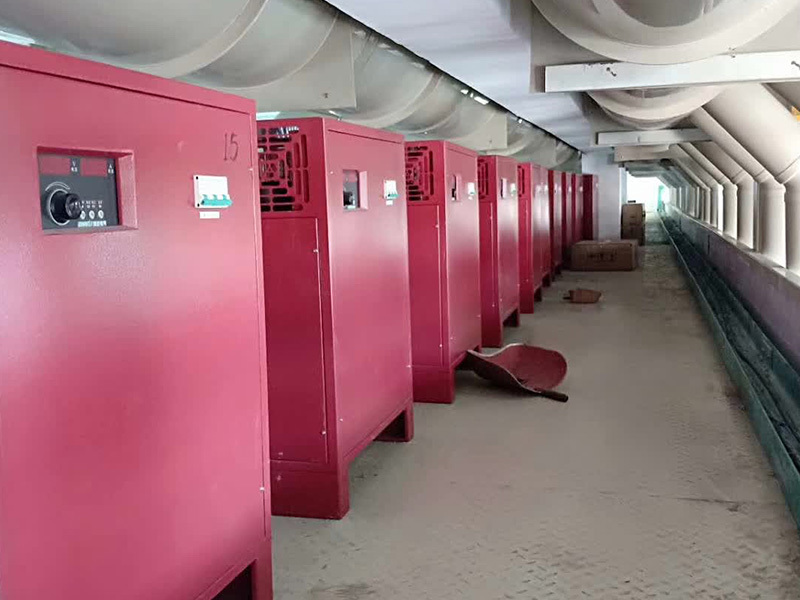
Modern power converters are gradually moving towards high-frequency operation, creating new opportunities for the development of electroplating power supplies.
Improving the efficiency of switching device switching frequency has many advantages for SPWM output, including improving SPWM density, capacity, and startup failure capability.
The professional limitations of traditional switching power supplies restrict the efficiency of switching power converters and fail to meet the needs of today's high-frequency applications. This article analyzes the design and application of high-power switching electroplating power supplies.
How should the electroplating power supply be designed, recommended by Puri?
1. Overall Design
To effectively maintain the high-power current output of the electroplating power supply, the switching power supply designed in this article uses multiple modules in series. The circuit input is connected to a 380V three-phase AC, and the CPU in the control circuit provides current based on the ballast and filter.
Part of the power supply is transmitted to the modules via DC contactors and main isolators. The rectifier tube is 540V. The filter is provided to the full-bridge output power conversion module via the filter, and then maintained by the ballast filter.
The CPU control module is connected to the LCD and keyboard, maintaining the output adjustment, display, communication, and maintenance of the operating voltage and current.
Using a full-bridge phase-shift zero voltage switching core circuit, soft switching technology is used to maintain a high-power, low-loss, high-frequency inverter power supply.
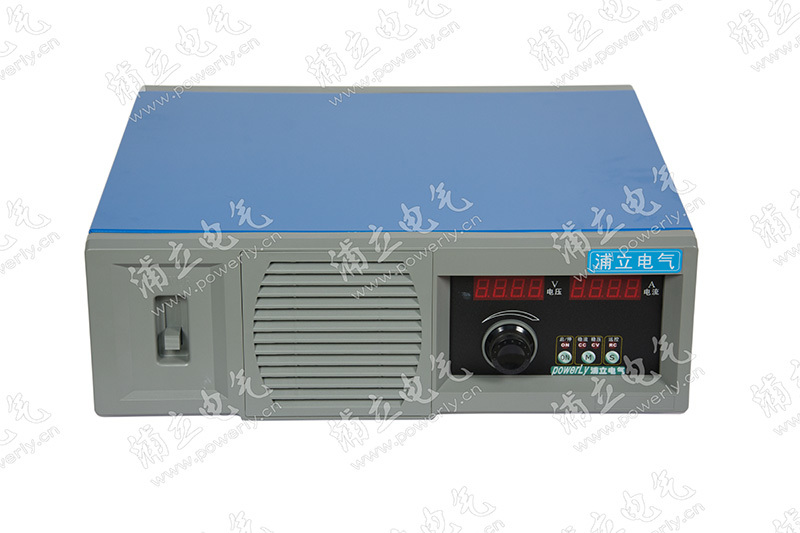
High-frequency switching uses high-power modules, which can effectively improve the efficiency of the power supply during operation. Using Schottky ballast modules for high-frequency ballasting effectively improves the efficiency of the power supply.
The main purpose of the control module output control signal is to maintain the rapid startup of the main circuit output, thereby obtaining dynamic and stable output characteristics. It can also maintain various input voltage fluctuations and maintain startup failure for problems caused by various factors.
The main functions of the power supply system include: automatic voltage regulation and adjustment based on output voltage and current deviation; current and ammeter detection of output status; overheat protection, overcurrent protection, and low-water protection; three-dimensional electronic optical alarm function, reliability, and constant current method to maintain system stability.
2. Optocoupler Circuit Design
The IGBT optocoupler circuit is a voltage control device, a fully controlled device, with high input impedance, sensitive to grid positive electricity, and a threshold voltage of 3V-6V, placing high demands on the optocoupler circuit.
For high power, optical coupling or transformer coupling is used for IGBT optocoupler circuits. The active side of the optical coupling control board can detect the operating voltage of the IGBT acquisition terminal, and in many cases, it can protect against short circuits and overcurrent, and can output overcurrent signals.
However, this method requires many power supplies, increasing circuit complexity. In contrast, the transformer coupling control board does not need to set a power supply, works faster, and has high input and output voltages. Then, the transformer coupling controller is used to obtain continuous reverse gate voltage during the shutdown process to protect against controller short circuits.
To allow the controller power circuit switch to respond quickly, high-speed controller integrated circuits are used in the design process, which can provide a large peak voltage.
3. High-Frequency Transformer
A high-frequency transformer is a magnetic device that can transmit energy and protect electrical products. It is an important component of a switching power supply transformer. Its characteristics directly affect the efficiency of the transformer and determine the characteristics of the power supply system.
In the design process, the transformer includes three choices: primary side turns ratio, secondary side turns ratio, and transformer core. In the selection of the transformer core, the important factors are the shape and material, including ferrite cores and aluminum alloy profiles. Ferrite cores have ferromagnetic properties and high resistance, suitable for high-frequency transformers.
4. Output Ballast and RC Snubber Network
In the selection of diodes, the diode current should be considered. Based on the calculation of the diode current and voltage rating, sufficient margin should be reserved, and finally, Schottky diodes are selected.
The main purpose of the RC snubber network is to prevent reverse recovery of the output rectifier diode during turn-off, which may cause ringing.
In the design process, the capacitance value can be taken as the parasitic capacitance value of the diode, and the resistance value is used to allow the capacitor to charge in one-tenth of the cycle, and the resistor power should be considered to meet the snubber requirements.
The high-power, high-frequency power supply transformer main circuit experimental equipment is a lightweight, net-weight light shell structure. The high-frequency transformer switching power supply components and primary side windings are water-cooled heat sinks. The three tubes on the upper right are the cooling system tap water pipes, and the main circuit conductive lines are seamless hollow pipes.
The experimental equipment houses a high-frequency transformer, a low-pass filter, and an output rectifier circuit. The basic concept of electroplating is based on the adsorption of electrodes to positively charged weak electrolytes, as the movement of weak electrolytes becomes electric current. However, due to standard limitations, and for the sake of maintaining the simulation of on-site electroplating processing, sodium chloride solution is used as the solution's acidity during the experiment.
Reducing the plate spacing means increasing the load and output current. Due to the presence of electric current, sodium oxide initially appears. The positive power supply turns black due to negative ion adsorption, while the negative power supply turns white. The greater the current, the more significant the phenomenon.
The on-site common problem simulation system can appropriately initialize failures, stop pulse signals, maintain modules, convert DC power constant current power supplies, and adjust output operating voltage.
This equipment is installed on the electroplating production line of a certain raw material company. After one year of operation, it is clear that the system designed in the original text is stable, high-quality, and environmentally friendly.
What are the application development trends of electroplating power supplies recommended by Puli?
1. High-frequency high efficiency
High-power high-frequency switching power supplies can replace traditional ballast power supplies, effectively reducing losses and improving output power density.
Today's electroplating power supply switching power supplies are applicable to small and medium-sized output power supplies below 1500A. Therefore, using excellent power electronics components and expertise, the limitations of modern power electronic devices and ferrite magnets can be innovated.
Using multiple control modules in series effectively improves the output capability of the switching power supply. Soft switching technology effectively reduces the switching losses of electronic components, effectively increases the switching frequency of the power supply, and improves the working environment of electronic components.
Using this technology can reduce the output power of switching tube losses at high frequencies, improve the overall efficiency of the switching power supply, and effectively increase the output frequency of the switching power supply.
2. Intelligent system
Electroplating processes require the elimination of human factors and the reduction of process energy consumption, thus increasing the demand for intelligent switching power supplies. In addition to the losses of switching power supply electronic components, process energy consumption also accounts for the vast majority of the electroplating process.
From the perspectives of energy saving and environmental protection and improving process quality, the key factors affecting process energy consumption are current efficiency and container pressure. The operating voltage output of the power supply is reasonably adjusted according to the temperature and concentration of the detected solution acidity.
From the control perspective, when the energy of the electroplating process is converted into a discrete time-varying system, a standard model cannot be established to maintain control.
Intelligent automatic control systems do not rely on humans. Based on human operation skills and work experience, relative control is performed, effectively improving the quality and characteristics of electroplating energy.
Therefore, during the rapid development of electroplating technology, we should design and develop intelligent switching power supply equipment to meet the needs of current socio-economic development.
The above is the content collected by the editor of Guangzhou Puli Electric Co., Ltd. If you need customization, please contact us.
MORE INFORMATION

Market and Development Trends of High-Frequency Switching Power Supply Manufacturers
High-frequency switching power supplies are an indispensable core component in modern electronic products. With the rapid development of electronic technology, especially the continuous progress in consumer electronics, communication equipment, and industrial automation, the market demand for efficient, compact, and stable power supplies is increasing. This has led to the booming development of high-frequency switching power supply manufacturers. In this article, we will explore the current market status and development trends of high-frequency switching power supply manufacturers. I. Industry Overview High-frequency switching power supplies are power supply devices that control energy conversion through electronic switching devices (such as transistors). The working principle is to convert the input DC or AC voltage into a stable output voltage through high-frequency switching operations. Compared with traditional linear power supplies, high-frequency switching power supplies have advantages such as small size, high efficiency, and low heat generation, and are widely used in various electronic products such as computers, televisions, communication equipment, and power tools. II. Market Demand With the popularization of smart devices and the requirements of energy saving and environmental protection, the market demand for high-frequency switching power supplies continues to grow. Especially in the fields of consumer electronics, industrial automation, LED lighting, and electric vehicles, modern power supply equipment is increasingly inclined to miniaturization, lightweight, intelligence, and high efficiency. Therefore, high-frequency switching power supply manufacturers
How to judge the technical strength of a high-frequency switching power supply manufacturer?
How to judge the technical strength of high-frequency switching power supply manufacturers? In today's rapidly developing technological era, high-frequency switching power supplies have become core components of numerous electronic devices. They are almost ubiquitous, from household appliances and communication equipment to industrial control systems. So, among the many high-frequency switching power supply manufacturers, how can we judge their technical strength? After all, choosing a manufacturer with strong technology is crucial for product stability and performance improvement. Let's explore this. 1. Understanding the manufacturer's R&D capabilities. First, R&D capability is an important indicator of the technical strength of high-frequency switching power supply manufacturers. We need to see if they have a strong R&D team and multiple independent intellectual property rights. In this field, technology is constantly being updated, and only continuous technological research and development can ensure success in fierce market competition. So, how do we evaluate a manufacturer's R&D capabilities? You can check their number of patents, participation in industry standard setting, and whether they have collaborations with universities or research institutes. If a high-frequency switching power supply manufacturer can continuously launch new technologies and products, their R&D capabilities are undoubtedly trustworthy. 2. Product testing and certification. Secondly, product
The Future of Electrical Equipment Manufacturing: Technological Innovation in High-Frequency Switching Power Supplies In today's rapidly developing era, the electrical equipment manufacturing industry is facing unprecedented challenges and opportunities. In particular, technological innovation in high-frequency switching power supplies is bringing new vitality to this industry. So, what is a high-frequency switching power supply? And how does it drive the future of the electrical equipment manufacturing industry? Basic Concept of High-Frequency Switching Power Supply Simply put, a high-frequency switching power supply is a device that controls energy conversion through high-frequency switching technology. Imagine a faucet; different water pressures and flow rates determine the amount of water supplied. A high-frequency switching power supply is like this faucet, precisely controlling the output of electrical energy. They are widely used in communications, industrial control, medical equipment, and other fields. Technological Innovation in High-Frequency Switching Power Supplies In recent years, the technology of high-frequency switching power supplies has been constantly innovating. First, the improvement in efficiency is obvious. Imagine you are cooking in the kitchen; if the thermal efficiency of the gas stove is improved, you can not only save gas but also shorten the cooking time. This is equally important for high-frequency switching power supplies. By adopting more efficient conversion technologies, manufacturers can not only reduce energy consumption but also reduce the heat generated by the equipment, improving overall performance. Furthermore, the size reduction is also significant.
SUBSCRIPTION INFORMATION
CATEGORY
Contact Us
Address: Room 204, Building 4, CIMC High-tech Intelligent Manufacturing Center, No. 3, Chanxing 1st Road, Xianyong Village, Chencun Town, Shunde District, Foshan City, Guangdong Province
Copyright © 2024 Guangdong Powerly Electric Co., Ltd. All Rights Reserved. Power:www.300.cn SEO License